Supporting factors
- Fiber (3.6 g/100 g) supports the nutrition score.
Need attention
- High saturated fat (14.29 g/100 g) weakens the nutrition score.
- Added sugars are unavailable, so sugar handling relies conservatively on total sugars.
Nutrition snapshot
The nutrient profile is mixed or moderate based on the available evidence.
Nutrition score
42
/100
Nutrition interpretation
Moderate signal
The nutrient profile is mixed or moderate based on the available evidence.
Help improve this record
Structured source data
Energy / 100g
536 kcal
Protein / 100g
7.14 g
Sugar / 100g
0 g
Ingredient-level explanation
Potatoes, palm oil (palm tocopherols), seaweed, salt, monosodium glutamate, chili pepper, tricalcium phosphate, disodium inosinate, disodium guanylate, vegetable oil (palm, coconut), silicon dioxide
Food score panel
Each dimension stays separate so the product can score well in one area and weakly in another without hiding trade-offs.
Nutrition score
42
/100
Nutrition profile
environmental signal is the strongest signal right now, while processing needs the most caution.
Strongest area
Environmental signal
Weakest area
Processing
Data confidence
medium
Data confidence
Data confidence 72/100
Medium reliability
Data coverage is partial and the interpretation carries moderate confidence.
Confidence layer
Category breakdown
The profile is on the weaker side and warrants attention.
Nutrition profile
Weak
42/100
42
Nutrition score based on nutrient profile only.
Processing
Very highly processed
Very highly processed
12
Processing indicator kept separate from the nutrition score.
Environmental signal
Strong
80/100
80
Product-specific environmental signal.
Label quality
Quite good
60/100
60
Label quality reflects completeness and consistency of the record, not nutrition quality.
How is the score built?
Open the methodology note
Nutrition score measures nutrient profile only. Processing, environment, label quality, and data confidence stay separate so missing data or formulation signals do not silently change nutrition quality.
The data is partial. The interpretation is usable but some conclusions may be refined.
Score drivers
Supports the assessment
Declared Eco-Score B supports the environmental indicator.
Impact: high
Fiber (3.6 g/100 g) supports the nutrition score.
Impact: medium
Pulls the score down
Declared NOVA group 4 anchors the processing indicator.
Impact: high
High saturated fat (14.29 g/100 g) weakens the nutrition score.
Impact: medium
Mandatory field coverage is only partial (63%).
Impact: medium
Uncertain area
Record completeness is 67%.
Impact: medium
Image evidence covers about 0% of the key fields.
Impact: low
Added sugars are unavailable, so sugar handling relies conservatively on total sugars.
Impact: low
Related products
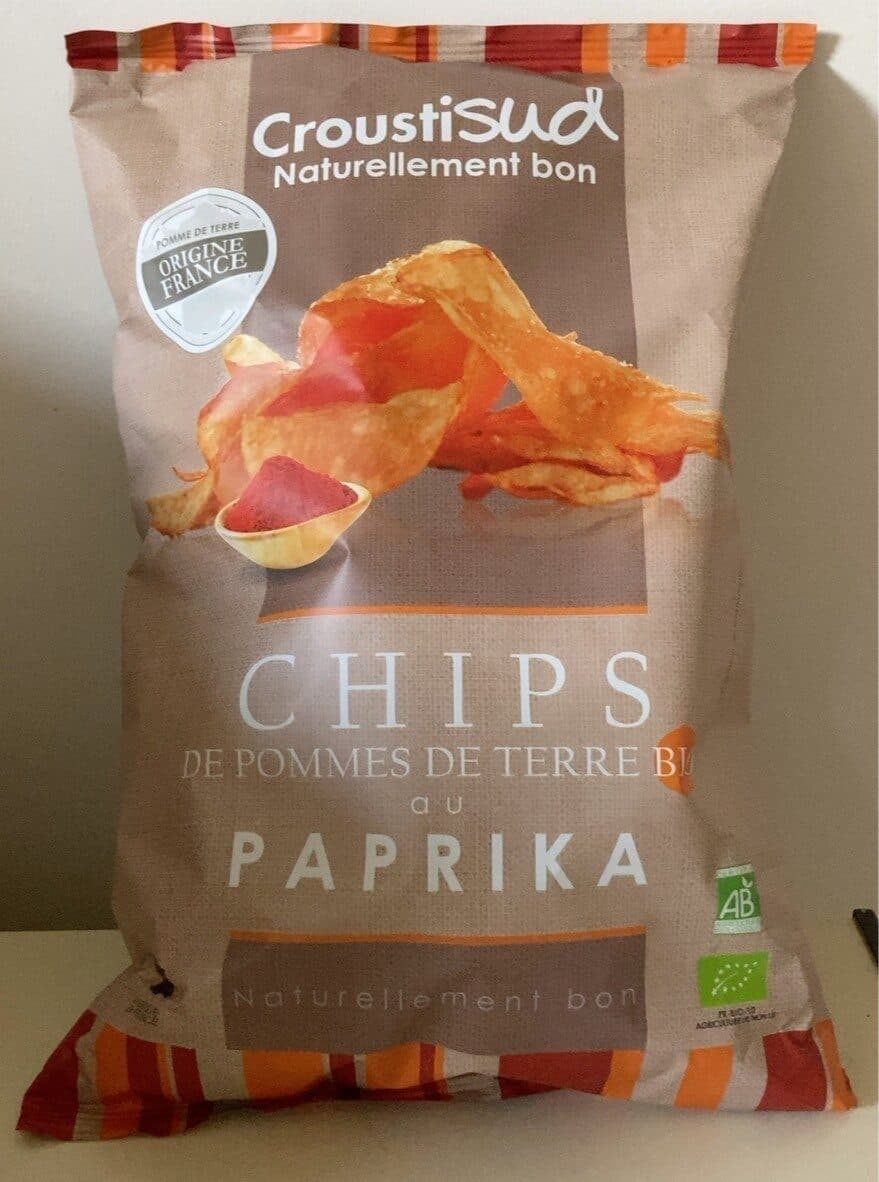
Plant-based. Ingredients: Pommes de terre* (57,7%), huile de tournesol * (35%), fécule de pommes de terre*, sel, paprika* (1,7%), tomate*, oignon*, ail*.. Evidence quality: high
nutrition score
Score summary
55
Nutrition score
label quality is the strongest signal right now, while processing needs the most caution.
Data confidence
91/100
high reliability
high confidence from label, nutrition, and source coverage

Plant-based. Evidence quality: medium
nutrition score
Score summary
73
Nutrition score
environmental signal is the strongest signal right now, while label quality needs the most caution.
Data confidence
70/100
medium reliability

Plant-based. Ingredients: Baies de Goji.. Evidence quality: high
nutrition score
Score summary
45
Nutrition score
processing is the strongest signal right now, while nutrition profile needs the most caution.
Data confidence
88/100
high reliability

Plant-based. Ingredients: Baies de canneberge BIO, Jus de canne évaporé BIO, Huile de tournesol BIO (- de 1%). Evidence quality: high
nutrition score
Score summary
44
Nutrition score
label quality is the strongest signal right now, while processing needs the most caution.
Data confidence
85/100
high reliability
NOVA 4 viitab ulatuslikule tööstuslikule töötlemisele ja suuremale formulatsiooni keerukusele.
Kohe
Võib soodustada ülesöömist, sest maitse- ja tekstuuriprofiil on sageli väga stimuleeriv.
Pikemas vaates
Sage tarbimine seostub kõrgema riskiga ebasoodsatele tervisetulemitele, kuid mõju sõltub toitumismustrist.
Loogika: novaGroup === 4.
Signaalid: NOVA grupp on 4 (ultra-töödeldud klass).
NOVA klass on tarbimismustri signaal ega tähenda üksiku toote põhjal automaatset diagnoosi.
Kõrge küllastunud rasva osakaal on oluline signaal, eriti kui sarnaseid tooteid tarbitakse sageli.
Kohe
Võib muuta toidukorra energiarikkamaks ja tekitada mõnel inimesel raskustunnet.
Pikemas vaates
Sage tarbimine võib tõsta ebasoodsa vere lipiidiprofiili riski.
Loogika: saturatedFat100g > 5 g/100 g.
Signaalid: Küllastunud rasv 14.3 g/100 g ületab lävendi 5 g/100 g.
Riskitõlgendus sõltub kogu rasvaprofiilist ja üldisest menüüst, mitte vaid ühest näitajast.
Ultra-töödeldud märge aitab vanemal hinnata, kas toode sobib igapäevaseks valikuks või pigem harvemaks.
Miks oluline
Rakendus kuvab selle lisakontekstina, et toetada lapse menüü üldist kvaliteeti, mitte anda mustvalget otsust ühe toote kohta.
Kohe
Võib tekkida kiire söömise ja varasema uue isu muster.
Pikemas vaates
Sage kasutus võib nihutada menüüd vähem täisväärtusliku toiduprofiili poole.
Põhineb peamiselt epidemioloogilisel ja institutsionaalsel kirjandusel ultra-töödeldud toitude tarbimismustrite kohta.
Signaalid: NOVA grupp on 4 (ultra-töödeldud profiil).
Kõrge küllastunud rasva taustsignaal
B-kiht: ettevaatlikkuse signaalMõõdukas teaduslik alusKüllastunud rasva signaal aitab hinnata, kas toode sobib lapse menüüs pigem harvemaks valikuks.
medium confidence from label, nutrition, and source coverage
high confidence from label, nutrition, and source coverage
high confidence from label, nutrition, and source coverage