Supporting factors
- Fiber (3.6 g/100 g) supports the nutrition score.
- Protein (14.29 g/100 g) provides limited support to the nutrition score.


Nutrition snapshot
The nutrient profile looks comparatively strong based on the available evidence.
Nutrition score
71
/100
Nutrition interpretation
Low signal
The nutrient profile looks comparatively strong based on the available evidence.
Help improve this record
Structured source data
Energy / 100g
357 kcal
Protein / 100g
14.29 g
Sugar / 100g
5.36 g
Ingredient-level explanation
semolina (wheat), durum flour (wheat), dried carrots, dried tomato, dried spinach, niacin, ferrous sulfate (iron), thiamin mononitrate, riboflavin, folic acid,
Food score panel
Each dimension stays separate so the product can score well in one area and weakly in another without hiding trade-offs.
Nutrition score
71
/100
Nutrition profile
label quality is the strongest signal right now, while processing needs the most caution.
Strongest area
Label quality
Weakest area
Processing
Data confidence
high
Data confidence
Data confidence 87/100
High reliability
The data is strong and the assessment carries high confidence.
Confidence layer
Category breakdown
The overall assessment is good, but some areas warrant further review.
Nutrition profile
Quite good
71/100
71
Nutrition score based on nutrient profile only.
Processing
Highly processed
Highly processed
34
Processing indicator kept separate from the nutrition score.
Environmental signal
Quite good
72/100
72
Estimated environmental signal with limited precision.
Label quality
Strong
92/100
92
Label quality reflects completeness and consistency of the record, not nutrition quality.
How is the score built?
Open the methodology note
Nutrition score measures nutrient profile only. Processing, environment, label quality, and data confidence stay separate so missing data or formulation signals do not silently change nutrition quality.
The data is broad and consistent. The interpretation is likely to remain stable.
Score drivers
Supports the assessment
Fiber (3.6 g/100 g) supports the nutrition score.
Impact: medium
Mandatory field coverage is strong (88%).
Impact: medium
Protein (14.29 g/100 g) provides limited support to the nutrition score.
Impact: low
Pulls the score down
Declared NOVA group 3 anchors the processing indicator.
Impact: high
A long ingredient list (26 ingredients) supports a more processed classification.
Impact: low
Uncertain area
Record completeness is 78%.
Impact: medium
Related products

Meals. Ingredients: de blé : Origine France (blé, gluten de blé, lilalt de blé, : 71, améliorant : E300, enzynes), Maroilles 30% : Origine - e lait deni?écrémé : Origine France, eau, crème fraîche : Origine œufs, beurre, le\ure, ferments lactiques, sel, sucre, poivre, Informations destinées aux personnes allergiques : cette recette contient : blé, lait, œuf, gluten Nos. Evidence quality: high
nutrition score
Score summary
44
Nutrition score
label quality is the strongest signal right now, while processing needs the most caution.
Data confidence
85/100
high reliability
high confidence from label, nutrition, and source coverage

Meals. Ingredients: Maroilles 30%, farine de blé, eau, fromage frais, oeufs, lait, beurre, levure, gluten de blé, sel, sucre, poivre.. Evidence quality: high
nutrition score
Score summary
44
Nutrition score
label quality is the strongest signal right now, while processing needs the most caution.
Data confidence
85/100
high reliability

Meals. Evidence quality: medium
nutrition score
Score summary
67
Nutrition score
nutrition profile is the strongest signal right now, while environmental signal needs the most caution.
Data confidence
72/100
medium reliability

Meals. Ingredients: _Poisson_ 37%, eau, légumes (carotte, oignons, poireaux, _céleri_), concentré de tomates, vin blanc, huile d'olive vierge extra, sel, sucre, ail, épices, fécule de pomme de terre (trace possible de _gluten_), plantes aromatique. Evidence quality: high
nutrition score
Score summary
69
Nutrition score
label quality is the strongest signal right now, while processing needs the most caution.
Data confidence
90/100
high reliability
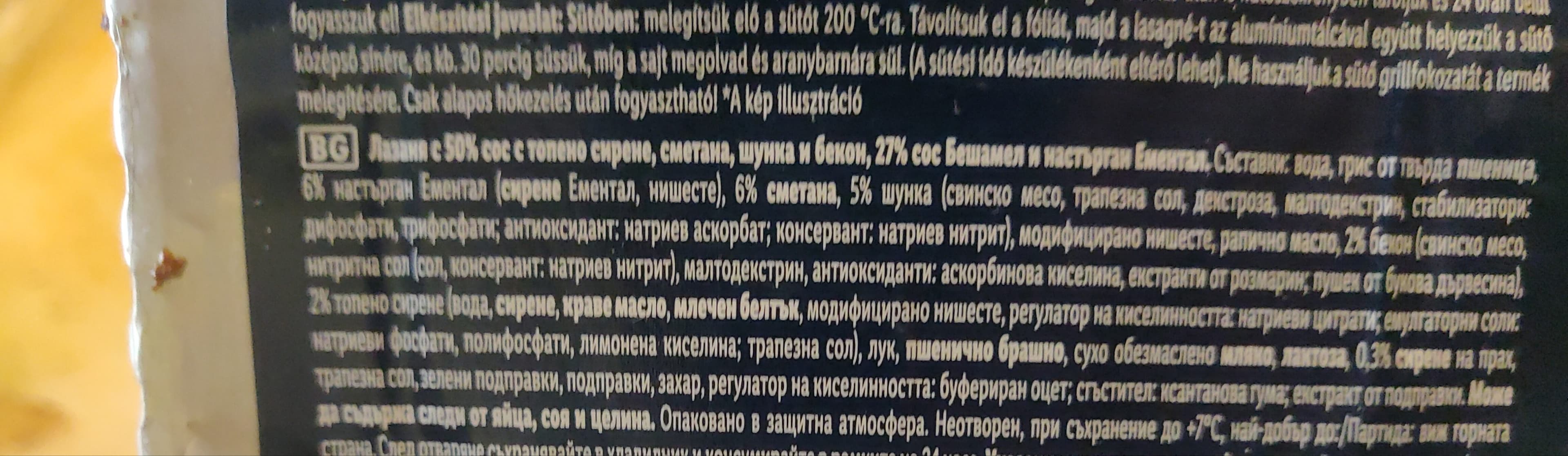
Töödeldud lihatooted ja nitriti/nitraadi markerid viitavad kõrgema ettevaatuse vajadusele.
Kohe
Võib suurendada soola- ja säilitusainete koormust ühes toidukorras.
Pikemas vaates
Sage tarbimine seostub kõrgema riskiga ebasoodsatele pikaajalistele tervisenäitajatele.
Loogika: Kategooria viitab töödeldud lihale või koostises/additiivides leidub E249, E250, E251, E252.
Signaalid: Koostises tuvastati markerid: nitraat.
See signaal ei asenda personaalset nõustamist. Tõlgendus sõltub tarbimissagedusest ja portsjoni suurusest.
Kui toode kuulub töödeldud liha profiili, kuvame selle vanemale pika vaate hariva märkusena.
Miks oluline
Sõnum on praktiline: sellised valikud sobivad pigem harvemaks, eriti kui lapsel koguneb menüüs palju soolaseid töödeldud tooteid.
Kohe
Võib kaasneda suurem janu ja soolakoormus samal päeval.
Pikemas vaates
Sage kasutus võib vähendada lapse menüü üldist toitumiskvaliteeti.
Põhineb IARC pikaajalise riski käsitlusel töödeldud lihatoodete kohta ning toitaineprofiili kontekstil.
Signaalid: Koostises tuvastati markerid: nitraat.
high confidence from label, nutrition, and source coverage
medium confidence from label, nutrition, and source coverage
high confidence from label, nutrition, and source coverage